
How does a cinematic temporality that is relational and intimate work against dominant, established modes of temporal reproduction?
2024, PhD Thesis, UNSW Arts Design and Architecture
This writing sets out to theorise how a cinematic practice can consciously orient itself towards an alternate sense of time, in the process generating a responsive and relational model of engagement with the ecologies of production. It was written between 2019 and 2024 as part of a practice based PhD thesis supervised by Bianca Hester and Astrid Lorange at the University of New South Wales’s school of Art, Design and Architecture and examined by Elizabeth Povinelli and Kim Knowles.
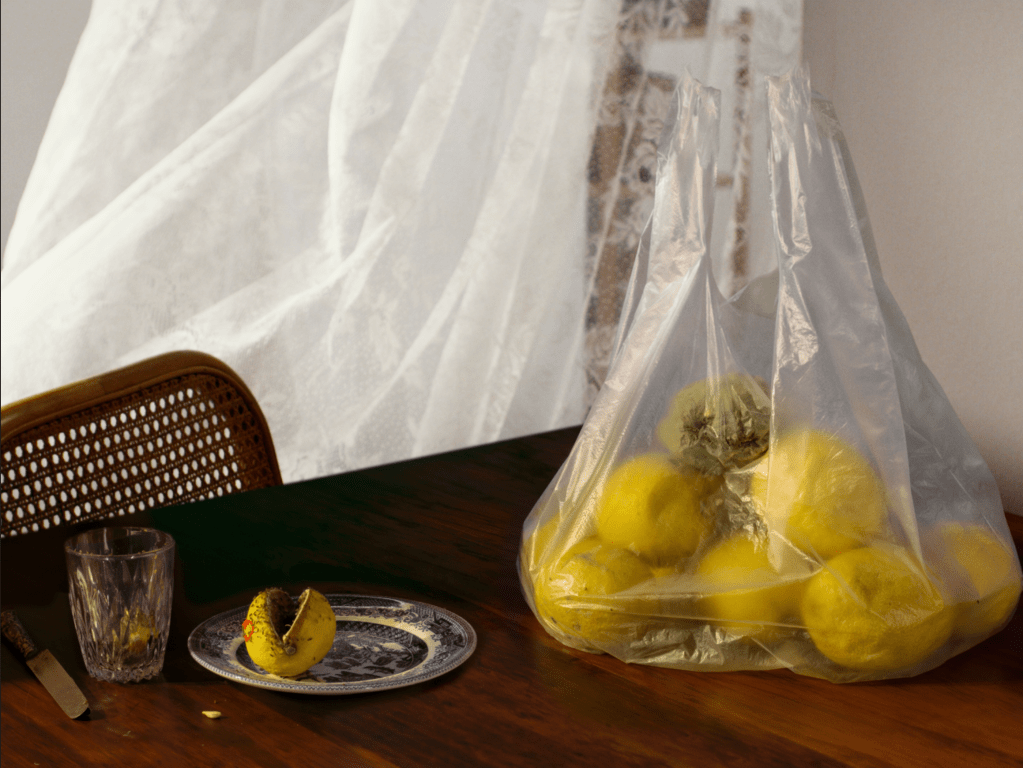
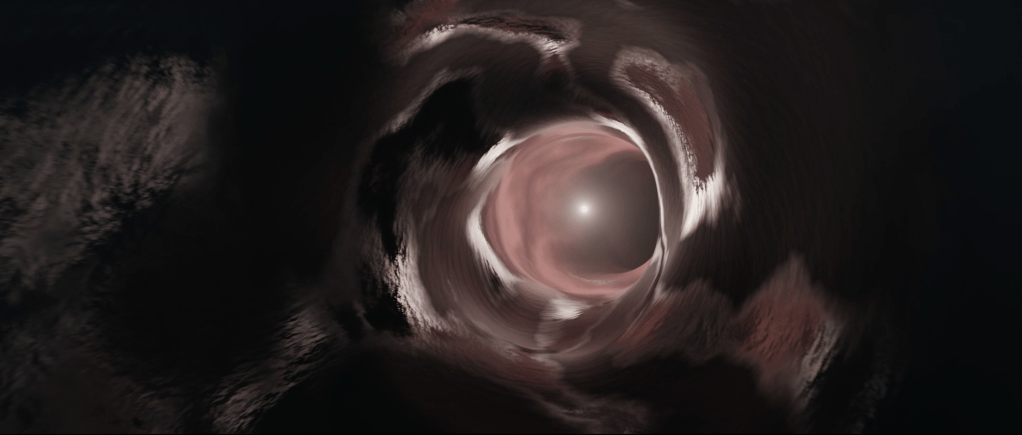
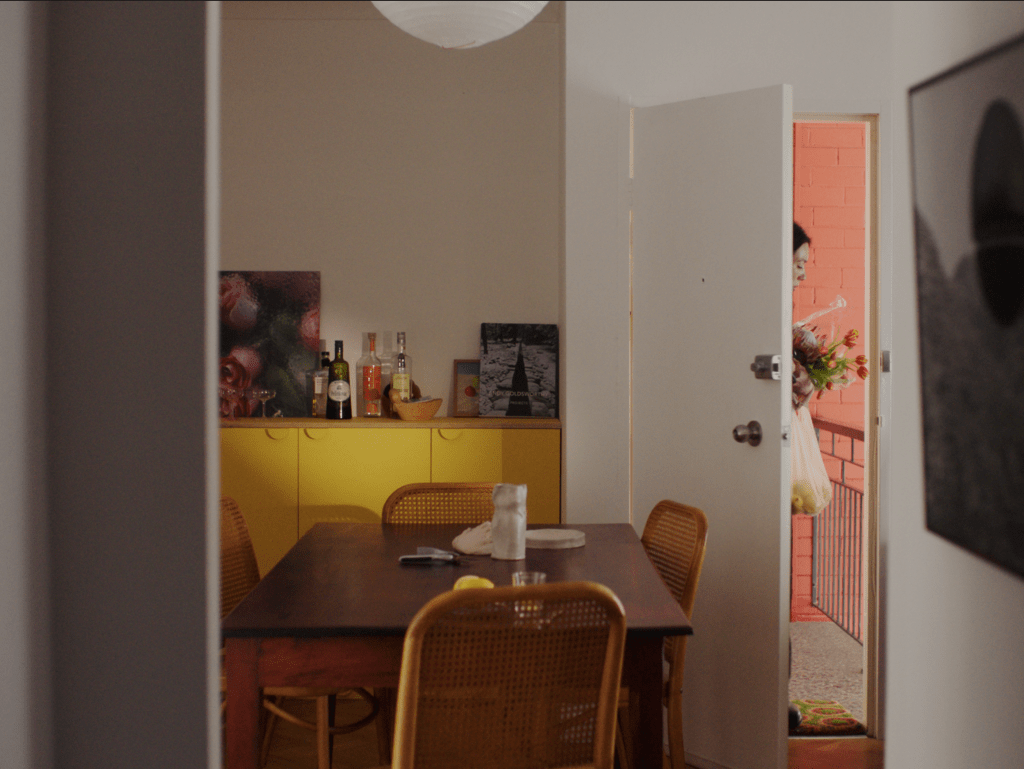
The project analyses and critiques the dominant time of colonial-capitalist Western modernity through a cinematic practice by first interrogating cinema’s emergence from and connections to colonial-capitalism, and second by investigating how the cinematic medium is temporised. To achieve this, two cinema works were produced as the practice-based component of the doctoral research project: The Fold (2021) and Residue (2024). These two cinematic works and the accompanying dissertation contribute to, and extend, the idea that time, as it is reproduced by the geometries of colonial-capitalist Western modernity—those same linear geometries seen in cinematic production systems—is relevant to how many humans see themselves in relation to the ecological environments we constitute. Thinking of time as a material in the very production of cinema, or as a contributing ecological force within a ‘cine-ecology’, a term from Debashree Mukherjee, is necessary because it encourages a practice aligned with the survival of complex ecosystems under attack from the ongoing colonial-capitalist project. I propose that while late colonial-capitalist temporality is linear, incremented and precise, it interweaves with many other kinds of temporal reckoning, where non-linear images abound. These non-linear images provide not only ways of thinking time otherwise, but offer methods for an alternative cinematic, temporal practice able to energise film-makers and spectators to recognise their impact in creating cultural understandings of time, thus empowering them to engage with the material, temporal and historical realities of cinema in relational and intimate ways.
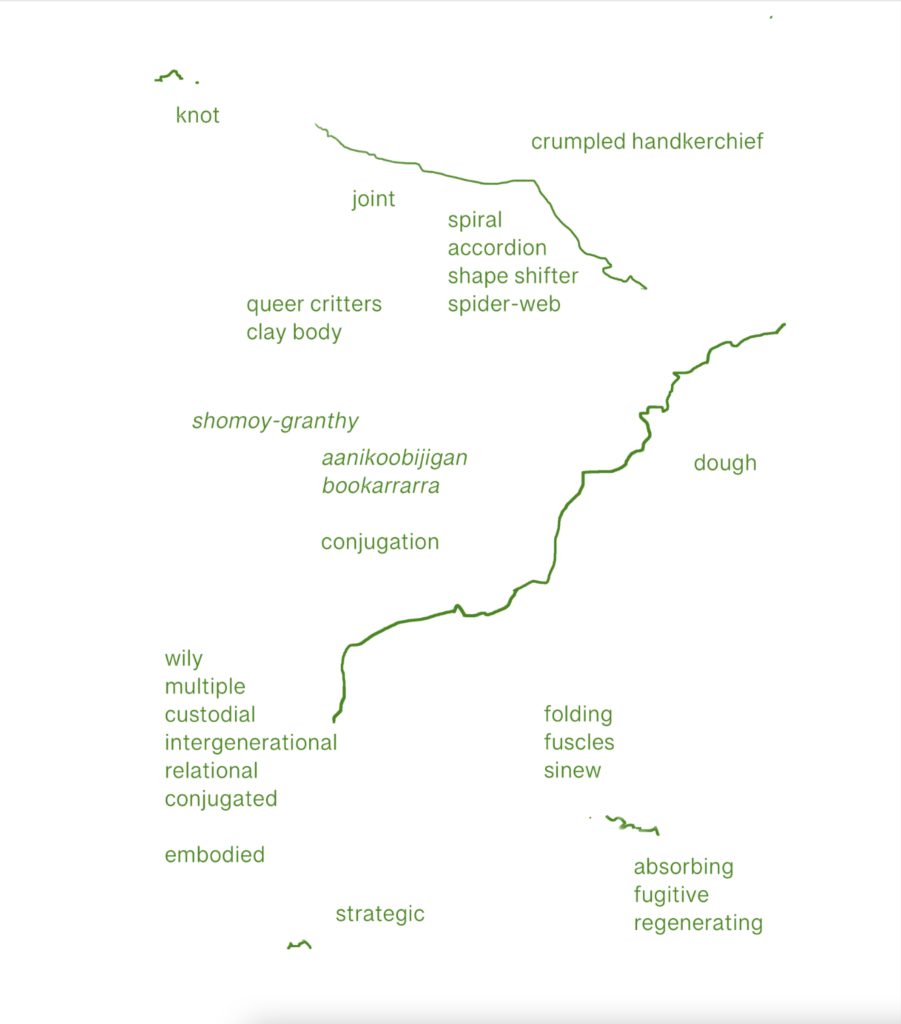
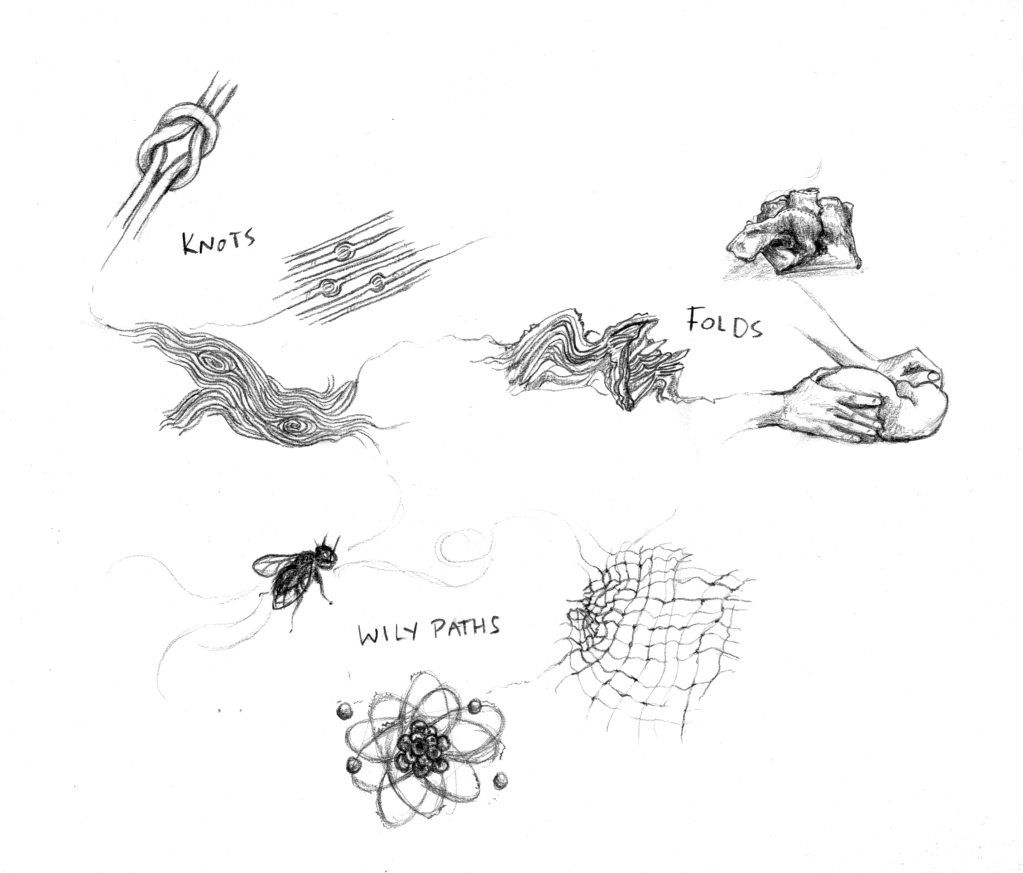
Elizabeth Povinelli, author of Geontologies: a requiem to late liberalism, 2016, and founding member of the Karrabing Film Collective, writes of this work that it provides a way “to link the space-time of the modern (colonial-capitalism) to the complicities of contemporary cinematic productions and to demonstrate another cinema whose spacetime is one of knots, folds, willy paths and other alternative forms could overcome the deadly metabolic rift of western space-time.”
Persistent link to this record
http://hdl.handle.net/1959.4/102129
DOI
https://doi.org/10.26190/unsworks/30110
 Miška Mandić